The AI product manager that closes the loop.
You shipped the fix, wrote the changelog, sent the newsletter. Modem remembers the people who asked and drafts the message that tells them it is done, for you to approve, so every request can turn into retention.







See it on your own data.
Because coding isn't the slow part
Teams are still spending too many cycles chasing down feedback, curating their backlog, and following up with users. Tedious work often done by a single person who holds all the context and bottlenecks execution. Modem fixes that.
Build what's actually important
Every bug report, every feature request, automatically clustered and prioritized
Unified company & user profiles to understand who matters and who can wait
Spot emerging trends before they become fires
 New Conversation
What are the biggest issues my customers are facing?


Here are three conversations from this week with lots of activity and high priority customers:


 High
High

 High
High Medium
 Product
I've been encountering frequent timeout errors when trying to search in the web app
@modem can you make a ticket for this, include any other relevant conversations, and assign me?
Done! This problem has been mentioned by two external customers as well. I've included a rollup in the ticket.

Timeout issues when searching in web app
Issue ENG-2831 in Linear
Multiple customers have reported timeout errors when searching in the web app. Here is...

Act on problems you didn't know you had
Get alerted to user concerns as they happen, not days later
Create detailed tickets straight from chat or through automations you set up
Delegate tasks to coding agents with the context they need to be successful
Close the loop at scale
Draft follow-ups to customers when their requests ship
Generate user-tailored release notes from GitHub PRs and Linear tickets
Automate personalized recurring digests, triage reports, and more in plain English
New ConversationCan you send our customers release notes every Monday at 9am based on what we've merged?
I created a scheduled task to post release notes for your customers based on your team's Github and Linear history:
Post Release Notes
Every Monday at 9am PT
Would you like me to ask you first with the notes for approval?
Not just an agent – a multiplayer platform
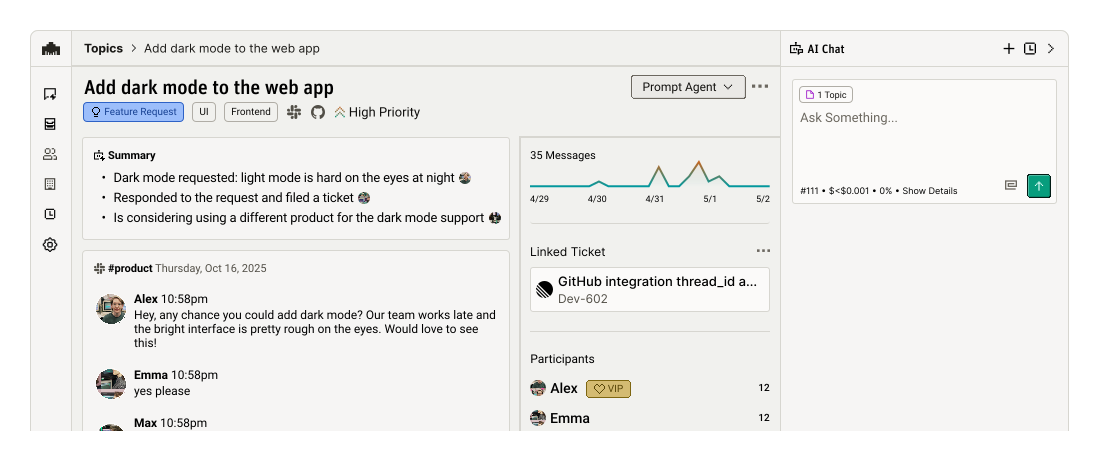
Built on a real-time discussion graph
Long-term memory sourced from user and team discussions
No tagging, no triaging — it just organizes itself
Semantic search that finds what you mean, not just what you type
What closing the loop with customers means
Support tickets get answered, issues get filed, fixes ship. The step that usually goes missing is telling the customer who reported the problem that it is fixed. Modem covers that path. It captures support conversations from Zendesk, Intercom, and Slack with the requester attached, and can file the engineering ticket when you ask. When a linked PR merges, it can tell your team who asked and draft the follow-up for you to approve.
The requester stays attached
Every conversation comes in linked to a person and company, so when the fix ships, Modem knows who asked.
One issue, not five
Reports of the same problem from Zendesk, Slack, and Discord merge into one topic, so there is one issue to file, not five.
Follow-ups wait for you
Modem drafts the messages back to customers. In Slack and, by default, in the dashboard, nothing reaches a customer until you approve it.
From support conversation to shipped and announced
- 1
- 2
Group reports into one topic
A Zendesk ticket about an error lands in the same topic as the Slack thread and the Discord report about it, so five reports do not become five tickets.
- 3
- 4
Track the work to done
Topic status and priority are visible in the Modem dashboard and from Slack, so the topic reflects where the fix stands.
- 5
Tell the people who asked
When a linked PR merges, an opt-in automation tells your team who asked. Modem drafts the follow-ups to the customers on the topic and, on request, release notes tailored to them, for you to approve.
Tell customers their fix shipped
A changelog announces the release to everyone. The follow-up goes to the specific people who reported the problem. Modem can draft it from the merged work itself, and can run recurring digests and triage reports described in plain English.
Know who to tell
With the opt-in Close the loop automation, Modem posts a Slack note to your team when a PR linked to a request merges, listing who asked.
Release notes from the work
On request, the agent drafts release notes tailored to the people who asked, from the GitHub PRs and Linear tickets behind the work, so the announcement matches what happened.
Approval on customer-facing messages
Modem drafts; in Slack and, by default, in the dashboard, a person reads and approves every customer-facing message first.
Common questions about closing the loop
Is there an AI tool that connects support conversations to engineering tickets?
Yes. Modem reads support conversations from Zendesk, Intercom, and Slack, then groups reports of the same problem into one topic. From the topic it can create a single issue in Linear or Jira when you ask, with the customer quotes attached. The requester stays linked to the topic, so you know who to follow up with when the fix is done.
How does Modem know which customers to follow up with when a fix ships?
Every conversation comes in with its requester, and Modem links each requester to a person and company. A topic carries everyone who raised it across every source, so when a linked PR merges, the list of people to follow up with already exists.
Does Modem message customers automatically?
It drafts the follow-ups and the release notes. In Slack and, by default, in the dashboard, anything that reaches a customer waits for your approval first.
Which support tools and issue trackers does it work with?
On the support side, Zendesk, Intercom, Slack, Discord, email, and Gong call transcripts. On the engineering side, Linear, Jira, GitHub, and GitLab. The full list is on the integrations page.
Does Modem replace Zendesk or Intercom?
No. Your support team keeps their tool. Modem reads the conversations and connects them to engineering work. When that work merges, it tells your team who asked, and the agent drafts the follow-up for you to approve when you ask.
Close the product gap